13 Cities You'll Need to Visit in England
1. LONDON
- ...of course!
London, the capital of England and the United Kingdom, is known for its rich history, iconic landmarks, and cultural significance. From the historic Tower of London and the grandeur of Buckingham Palace to the modern skyline dominated by The Shard and the London Eye, the city blends tradition with modernity. London is home to world-class museums like the British Museum and the Tate Modern, lush green parks like Hyde Park, and famous shopping districts like Oxford Street. Its dynamic culture, international cuisine, and bustling arts scene make it one of the most exciting cities in the world.
Some of the key attractions include:
- Big Ben and the Houses of Parliament
- The Tower of London
- Buckingham Palace
- The British Museum
- The Tower Bridge
- Westminster Abbey
- St. Paul's Cathedral

2. OXFORD
- Often referred to as the "City of Dreaming Spires" due to its beautiful skyline of Gothic towers, Oxford is one of the most famous cities in England. Located about 60 miles (96 kilometers) northwest of London, the city is world-renowned for the University of Oxford, the oldest university in the English-speaking world, with roots dating back to the 12th century. Over the centuries, the university has produced a wealth of influential figures, including 28 British prime ministers, numerous Nobel laureates, and iconic writers such as J.R.R. Tolkien and C.S. Lewis.
The city is filled with stunning medieval architecture, picturesque college buildings, and iconic landmarks like the Radcliffe Camera, the Bodleian Library, and Christ Church College. Oxford also offers beautiful green spaces, such as the University Parks and the Botanic Garden, as well as a lively cultural scene with museums like the Ashmolean and the Oxford University Museum of Natural History. Its rich academic and literary heritage gives Oxford a timeless charm.
If you are a Harry Potter fan, don't miss out on the Christ Church College, where some of the movies' scenes were filmed!
Some of the key attractions include:
- The University of Oxford
- Radcliffe Camera
- The Bodleian Library
- Christ Church College
- Ashmolean Museum
- Balliol College

3. CAMBRIDGE
Located in the eastern part of England, about 50 miles (80 kilometers) north of London, the historic city of Cambridge is best known, among other things, for its University, which was founded in 1209.
The city is a hub of intellectual achievement and academic excellence; its university, consistently ranked among the top in the world, has produced countless famous alumni, including Sir Isaac Newton, Charles Darwin, and Stephen Hawking.
The city is characterized by its stunning university architecture, including iconic colleges like King's College and Trinity College. Visitors can enjoy picturesque views along the River Cam, take part in traditional punting, and explore the rich cultural offerings, including the Fitzwilliam Museum and the Botanic Garden. With its blend of academic excellence, historical charm, and scenic beauty, Cambridge is a captivating destination.
Key attractions include:
- University Colleges
- The Fitzwilliam Museum
- Mathematical Bridge
- St Mary's Church

4. BATH

Key attractions include the ancient Roman Baths, where visitors can explore the preserved hot springs, and the magnificent Bath Abbey, a towering Gothic church. The Royal Crescent and Circus showcase Bath’s elegant Georgian townhouses, while the city is also known for its natural hot springs, which visitors can still enjoy at the modern Thermae Bath Spa. Bath combines historical charm with modern culture, making it a must-visit destination. Key attractions include:
- The Roman Baths
- Bath Abbey
- The Royal Crescent
- Pulteney Bridge
- Thermae Bath Spa
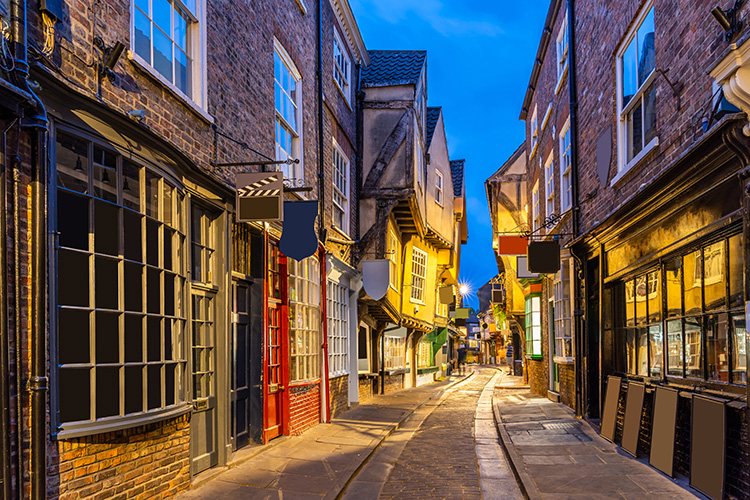
York is a historic city in northern England, renowned for its rich medieval heritage and well-preserved architecture. Founded by the Romans in 71 AD as Eboracum, it later became a Viking capital, and today it boasts a blend of history and charm. Key landmarks include the towering York Minster, one of the largest Gothic cathedrals in Europe, and The Shambles, a narrow medieval street lined with timber-framed shops. Visitors can walk along York's ancient city walls, explore its Viking past at the Jorvik Viking Centre, and enjoy the picturesque views along the River Ouse.
Key attractions include:
- York Minster (one of Europe’s largest cathedrals)
- The Shambles (picture below)
- York Castle Museum
- The Jorvik Viking Centre
- Clifford's Tower
6. MANCHESTER
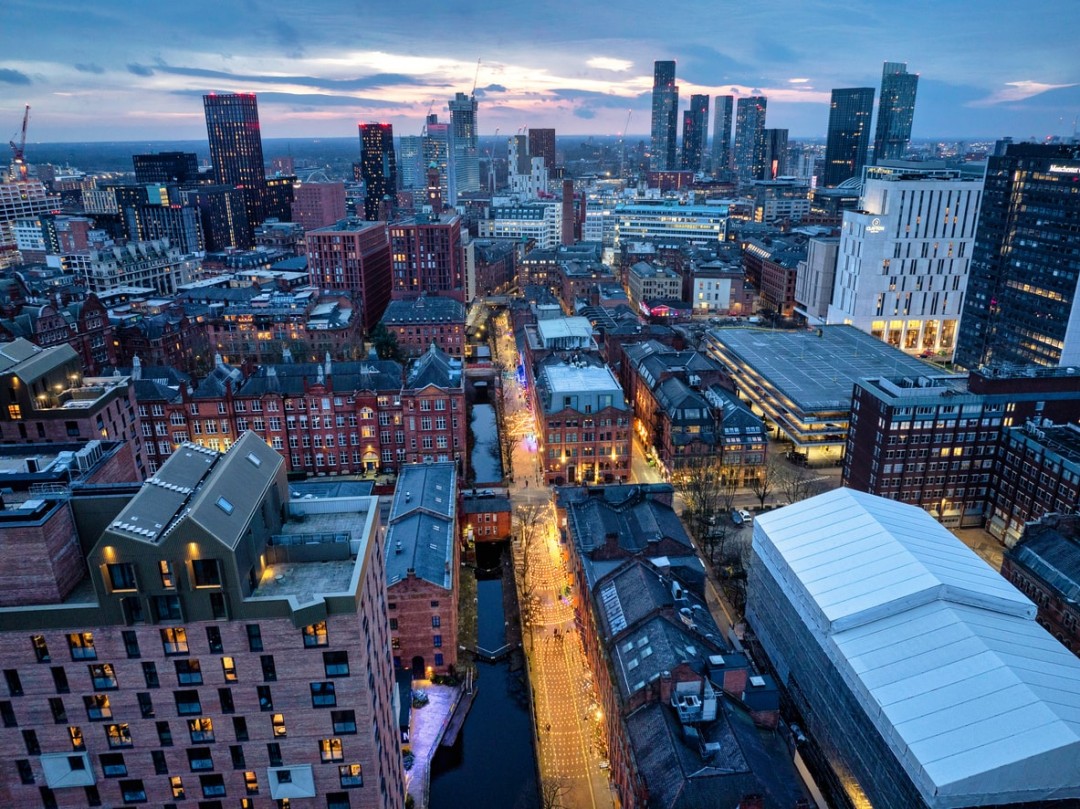
Manchester is city in northern England, known for its rich industrial heritage, influential music scene, and passionate football culture. Once at the heart of the Industrial Revolution, it now boasts a mix of modern and Victorian architecture, with landmarks like the historic Town Hall and the futuristic Beetham Tower. Cultural attractions include the Museum of Science and Industry, Manchester Art Gallery, and the lively Northern Quarter, famous for its street art and independent shops. Home to two world-famous football clubs, Manchester United and Manchester City, the city pulses with sporting pride. attractions include:
- The Museum of Science and Industry
- Manchester Art Gallery
- Manchester Cathedral
- Old Trafford (Manchester United's stadium)
- Etihad Stadium (Manchester City's stadium)
7. LIVERPOOL
Liverpool is a city in northwest England, known for its rich maritime history, cultural heritage, and as the birthplace of The Beatles. It boasts a stunning waterfront, including the Royal Albert Dock, a UNESCO World Heritage site, filled with museums, galleries, and restaurants. Liverpool is also home to iconic landmarks like the Liver Building, the towering Liverpool Cathedral, and Anfield Stadium, home to Liverpool FC. With a thriving music scene, diverse cultural festivals, and impressive architecture, Liverpool offers a dynamic blend of history, arts, and modern urban life. Key highlights:
- The Beatles Story Museum
- The Royal Albert Dock
- Tate Liverpool
- Liverpool Cathedral
- Anfield Stadium (home of Liverpool FC)

8. BRIGHTON
Brighton is a seaside city on England's south coast, known for its eclectic culture, artistic vibe, and lively atmosphere. Famous for its iconic Brighton Pier, pebbled beach, and the exotic Royal Pavilion, the city offers a mix of traditional British seaside charm and modern, bohemian energy. Visitors can explore quirky boutiques and cafes in The Lanes, admire street art, or enjoy the buzzing nightlife. Brighton also hosts various festivals and events, making it a dynamic and creative hub for both locals and tourists. Some must-sees:
- Brighton Pier
- The Royal Pavilion
- The Lanes (shopping and dining)
- Brighton Beach

9. BRISTOL
Bristol is an energetic city located in southwest England, celebrated for its deep maritime heritage and cultural variety. Positioned along the Avon Gorge, with a lively harbor, it features a fascinating combination of historic buildings and modern advancements. The city is renowned for its iconic Clifton Suspension Bridge, vibrant arts community, and flourishing music and theater scene. With its distinctive blend of historic allure and contemporary spirit, Bristol provides a dynamic and inviting. Key attractions include:
- Clifton Suspension Bridge
- Bristol Harbour
- SS Great Britain (a historic steamship)
- Banksy's street art (Bristol is his hometown)

10. DURHAM
Durham is a historic city in northeastern England, known for its impressive cathedral and castle, both of which are UNESCO World Heritage Sites. The city sits on the banks of the River Wear and has a charming, medieval feel with its narrow streets and traditional architecture. Durham University, one of the oldest and most prestigious universities in the UK, adds a lively academic atmosphere to the area. The surrounding countryside features beautiful landscapes, including nearby Durham Dales and the scenic coastline. Highlights include:
- Durham Cathedral
- Durham Castle
- River Wear walks

11. SALISBURY
Salisbury is a charming city in southern England, known for its stunning medieval architecture and historic significance. At its heart is Salisbury Cathedral, an architectural masterpiece of Early English Gothic style. Completed in 1258, the cathedral boasts the tallest spire in the UK, soaring 123 meters (404 feet) into the sky. Salisbury Cathedral is also home to one of the best-preserved original copies of the Magna Carta, the historic document that laid the foundations for modern legal rights and liberties. Visitors can view this ancient text in the cathedral’s Chapter House and explore the cathedral’s impressive cloisters and medieval clock, believed to be the oldest working clock in the world.
The city is also famous for its proximity to Stonehenge, one of the world's most iconic prehistoric monuments. Salisbury's bustling market square, quaint streets, and vibrant cultural scene make it a delightful destination for visitors.
Don't miss:
- Salisbury Cathedral
- Old Sarum
- Salisbury Market Square
- Stonehenge

12. NEWCASTLE UPON TYNE
Newcastle upon Tyne, often simply called Newcastle, is a city in the northeast of England known for its rich industrial heritage and lively cultural scene.
One of Newcastle’s most striking features is its iconic Tyne Bridge, a symbol of the city and a marvel of early 20th-century engineering. The bridge connects Newcastle with its sister city, Gateshead, across the River Tyne. Together, these cities form the Tyneside metropolitan area, a hub for commerce, culture, and nightlife. Nearby, the modern Gateshead Millennium Bridge adds to the skyline with its sleek, tilting design, linking the vibrant Quayside area, a hotspot for restaurants, bars, and galleries.
The city is famed for its friendly locals, bustling nightlife, and historic landmarks such as the medieval Newcastle Castle. With a thriving arts scene, diverse dining options, and beautiful surrounding landscapes, Newcastle offers a unique blend of history, culture, and contemporary urban life. Key sites:
- The Tyne Bridge
- Newcastle Castle
- The Baltic Centre for Contemporary Art
- The Quayside

13. WINCHESTER
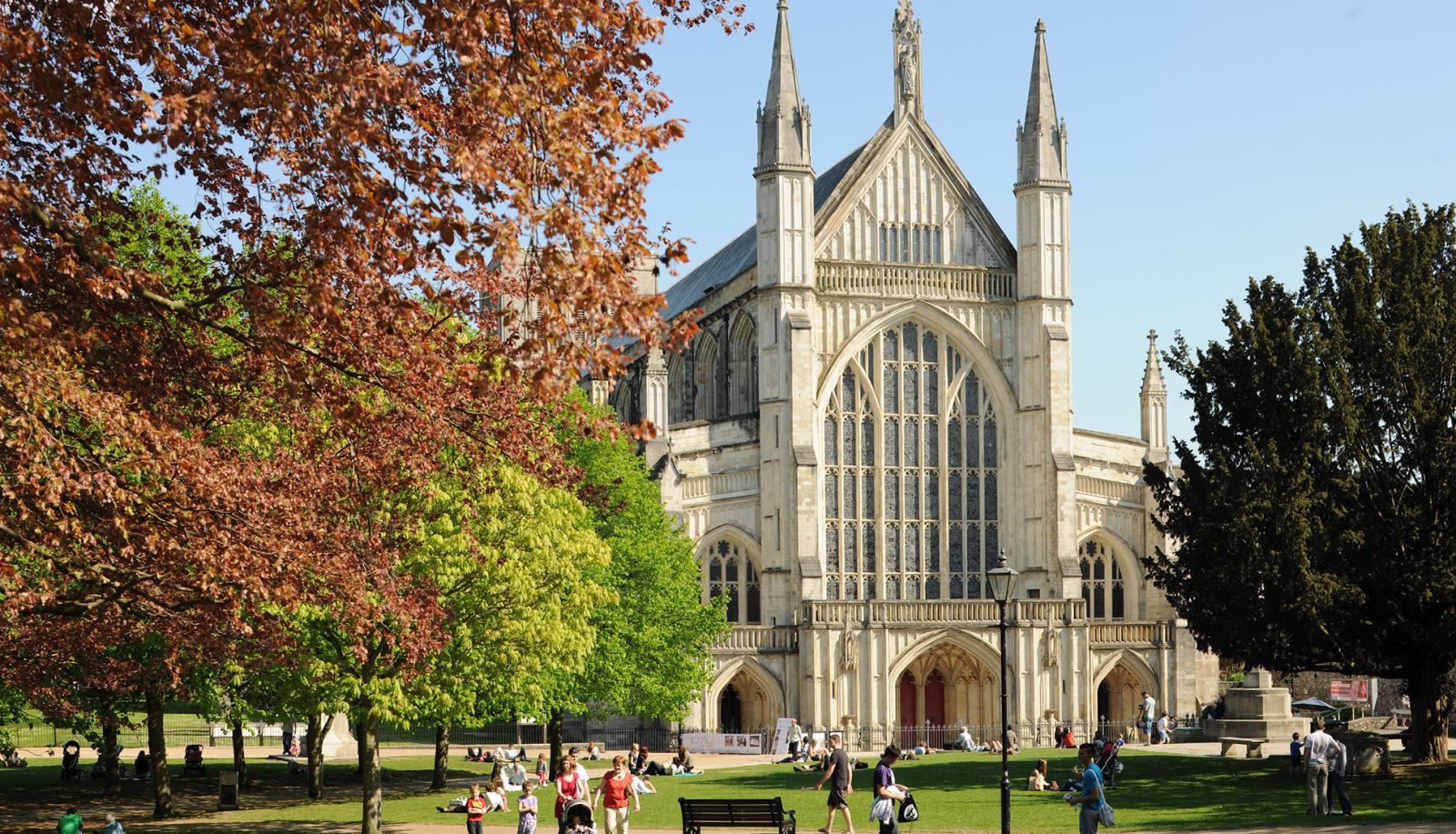
Winchester, located in southern England, is a city steeped in history and charm, best known for its stunning medieval cathedral and its role as the ancient capital of England. Nestled in the picturesque county of Hampshire, this small yet historically significant city offers visitors a blend of architectural beauty, cultural heritage, and natural landscapes.
The city’s crown jewel is Winchester Cathedral, one of the largest and most impressive Gothic cathedrals in Europe. Originally founded in 1079, it features a magnificent Norman façade and boasts the longest nave of any Gothic cathedral in the world. Winchester Cathedral is also the final resting place of Jane Austen, one of England’s most celebrated authors, and her grave can be found inside the cathedral. The cathedral’s Great Hall is home to the legendary King Arthur’s Round Table, adding to Winchester’s allure as a place where myth and history intertwine.
The city offers a blend of medieval history and modern amenities, with quaint streets, vibrant markets, and beautiful parks making it a delightful destination for visitors and residents alike. Highlights include:
- Winchester Cathedral
- The Great Hall (home of King Arthur’s Round Table)
- Wolvesey Castle
So, have you visited any of these cities already or you are planning to soon? Let us know in the comments section!
Safe travels!


Comments
Post a Comment